
Roofs take the harshest beating from nature. Sunlight, heavy rains, temperature variations, and seasonal expansion create constant stress on roofing materials. Over time, this leads to cracks, blistering, ponding water, and leakage through the roof slab or terrace. These issues not only damage the building structure but also affect electrical systems, interiors, and safety.
This is why roof waterproofing has become one of the most important components of modern construction. A well-designed waterproofing system prevents water penetration, increases durability, reduces heat transfer, and ensures long-term protection for concrete roofs, sloped roofs, metal roofs, and terraces.
In this detailed guide, you will learn everything about roof waterproofing, including causes of roof leakage, types of waterproofing systems, materials to use, application methods, mistakes to avoid, and how to select the right solution for your roof.
Why Roof Waterproofing Is Important
Whether residential, commercial, or industrial, every structure needs proper roof protection. Here is why roof waterproofing is essential:
1. Prevents Water Leakage
Unchecked leakage damages interiors, walls, ceilings, and electrical points.
2. Protects the Structural Integrity
Moisture weakens concrete, causes corrosion of reinforcement, and increases cracks over time.
3. Reduces Heat Absorption
Elastomeric and acrylic coatings lower roof temperature, improving indoor comfort and reducing cooling costs.
4. Prevents Mold and Fungus
Moist environments encourage microbial growth leading to health hazards.
5. Increases Roof Lifespan
Waterproofing prevents deterioration and extends the life of the roof slab.
6. Enhances Property Value
A dry, protected roof is a major benefit for any buyer.
A one-time investment in waterproofing can save years of repair, repainting, and maintenance costs.
Common Causes of Roof Leakage
Understanding the source of the problem helps select the correct waterproofing method.
1. Cracks in Concrete Roof
Thermal expansion and contraction create cracks through which water enters.
2. Poor Drainage and Ponding Water
Improper slope leads to water accumulation causing seepage through weak points.
3. Failed Waterproofing Layer
Old coatings wear out, blister, and lose adhesion over time.
4. Damaged Expansion Joints
Movement in the building damages joints and causes leakage.
5. Poor Quality Construction
Weak concrete mix, improper curing, or no protective layer leads to early damage.
6. Pipe and Outlet Leakages
Plumbing joints are common leakage points in terraces.
7. UV Degradation
Sunlight damages exposed waterproof coatings and membranes.
Once you identify the root cause, you can select the correct solution.
Types of Roof Waterproofing Systems
Different roofing conditions require different solutions. Here are the most effective waterproofing systems used today.
1. Acrylic Roof Waterproofing
Acrylic coating is one of the most popular solutions for concrete roofs and terraces.
Features
- Highly UV resistant
- Flexible and durable
- Cool roof effect reduces heat
- Suitable for light to moderate rainfall regions
Where to Use
- Residential terraces
- Concrete roofs
- Metal roofs
- Industrial sheds
Benefits
- Easy to apply
- Cost-effective
- Environment friendly
- Provides a seamless finish
2. Polyurethane Roof Waterproofing
Polyurethane waterproof coating is ideal for roofs exposed to heavy rainfall, ponding water, or movement.
Features
- Highly elastic
- Strong adhesive bonding
- Suitable for complex details, pipes, and joints
- Excellent crack-bridging
Where to Use
- Flat roofs
- Industrial roofs
- Metal sheet roofs
- Areas with heavy foot traffic
Benefits
- Long-lasting protection
- UV resistant grades available
- Seamless application
PU coating delivers some of the highest waterproofing performance.
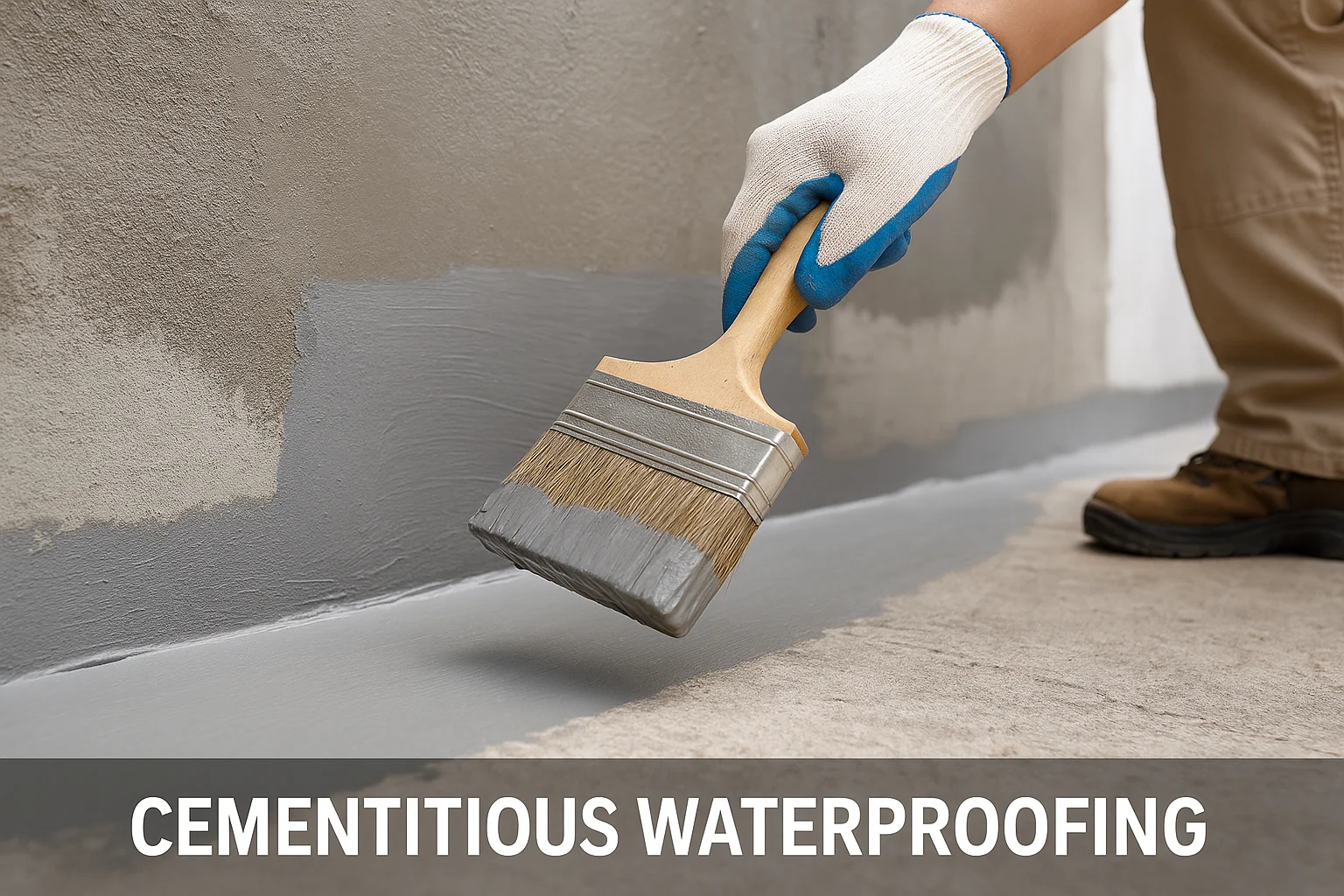
3. Cementitious Roof Waterproofing
A cement based coating used as a protective barrier on concrete surfaces.
Features
- Easy to mix and apply
- Bonds strongly with concrete
- Ideal as a base coat or under-tile coat
Where to Use
- Water tanks
- Roof slabs
- Wet areas
- Terraces under tile finish
Benefits
- Good for positive and negative pressure
- Durable and reliable
4. Bituminous Waterproofing Membrane
APP and SBS membranes are widely used for large roofs and demanding conditions.
Features
- High tensile strength
- Torch applied or self adhesive
- Excellent weather resistance
Where to Use
- Commercial roofs
- Industrial buildings
- Sloped roofs
- Exposed terraces
Benefits
- Proven performance
- Long lasting
- Suitable for extreme climates
Bituminous membranes offer some of the best durability for roof waterproofing.
5. Liquid Applied Membrane Systems
These include polyurethane, polyurea, and hybrid membranes.
Features
- Seamless finish
- Highly durable
- Ideal for detailed roof geometry
Benefits
- Easy to maintain
- High elastic recovery
- Resistant to chemicals and weather
6. Roof Sealants and Crack Fillers
Special crack sealants help repair minor cracks before applying waterproof coating.
Types include:
✔ Polyurethane sealant
✔ Silicone sealant
✔ Hybrid sealants
✔ Acrylic crack fillers
These improve adhesion and prevent micro-leakages.
Best Materials for Roof Waterproofing
Some high quality materials used for roof waterproofing include:
✔ Waterproof primers
✔ Elastomeric roof coatings
✔ Polyurethane roof coatings
✔ APP and SBS membranes
✔ Acrylic cool roof coatings
✔ Liquid applied PU membrane
✔ Drain boards
✔ Roof expansion joint tapes
✔ Roof crack repair compounds
Always choose trusted, premium products to ensure long-term durability.
How Roof Waterproofing Is Done: Step-by-Step
Professional roof waterproofing includes several steps:
Step 1: Cleaning and Surface Preparation
Debris, algae, dust, and loose materials are removed.
Step 2: Crack Filling
All cracks are opened and filled with PU or acrylic crack filler.
Step 3: Slope Correction
Areas with ponding water are leveled.
Step 4: Priming
A waterproof primer is applied for proper bonding.
Step 5: Applying Waterproofing Layer
Depending on the system, acrylic, PU, or membrane coating is applied in multiple layers.
Step 6: Detailing
Pipes, joints, skirting, and corners are reinforced.
Step 7: Final Protective Layer
A UV resistant or reflective topcoat improves life and heat performance.
Proper application ensures long-term waterproofing and durability.
Roof Waterproofing Mistakes to Avoid
Many failures occur due to incorrect product choice or poor workmanship.
Avoid these mistakes:
- Using interior waterproofing for exterior roof
- Applying coating on wet or dusty surfaces
- Not repairing cracks before coating
- Choosing cheap low-quality materials
- Ignoring drainage slope
- Applying thick coats at once instead of multiple thin layers
- Not using roofing primer
Correct technique and materials are key to success.
How to Choose the Right Roof Waterproofing System
Choosing the right system depends on:
✔ Roof type: flat, sloped, concrete, metal
✔ Climate and rainfall intensity
✔ Foot traffic requirements
✔ Budget
✔ Life expectancy of coating
✔ Existing damage
✔ Sunlight exposure
For example:
- Acrylic coatings suit moderate climates
- Polyurethane is best for heavy rainfall and ponding water
- Bituminous membranes suit large commercial roofs
- Cementitious coating is ideal under tiles
Benefits of Roof Waterproofing
Waterproofing the roof brings several long-term benefits:
1. Protects the structure
Prevents concrete damage and corrosion.
2. Increases roof lifespan
Slows deterioration and extends roof life.
3. Provides heat insulation
Reflective coatings reduce roof temperature and improve comfort.
4. Prevents costly repairs
Stops leakage before it causes major damage.
5. Enhances property value
A well-protected building is more attractive to buyers.
6. Ensures safety
Prevents electrical hazards from water seepage.
Professional Roof Waterproofing vs DIY
Small cracks can be sealed with DIY products.
However, professional waterproofing is essential when:
- Roof has severe cracks
- Leakage appears every monsoon
- Coating is peeling
- Water ponding exists
- Old waterproofing has failed
Professionals use high-quality materials and ensure long-term performance.
Final Thoughts
Roof waterproofing is one of the most important investments for any building. It ensures long-lasting protection against rain, UV exposure, cracks, and heat. Choosing the right waterproofing method and applying it correctly can save thousands in repairs and keep your structure strong for years.
Whether you choose acrylic, polyurethane, cementitious, or bituminous systems, ensure that the surface is prepared well and high-quality materials are used.
